
Tea journal · 2026-11-18
How to choose 5–8-year Xinhui aged mandarin peel for everyday cup brewing | Wufang Yuewu
For an everyday cup of aged-peel infusion, 5–8-year Xinhui peel is worth comparing carefully. Instead of asking whether eight years is automatically better than five, ask which sample expresses mandarin aroma most clearly in your own cup.
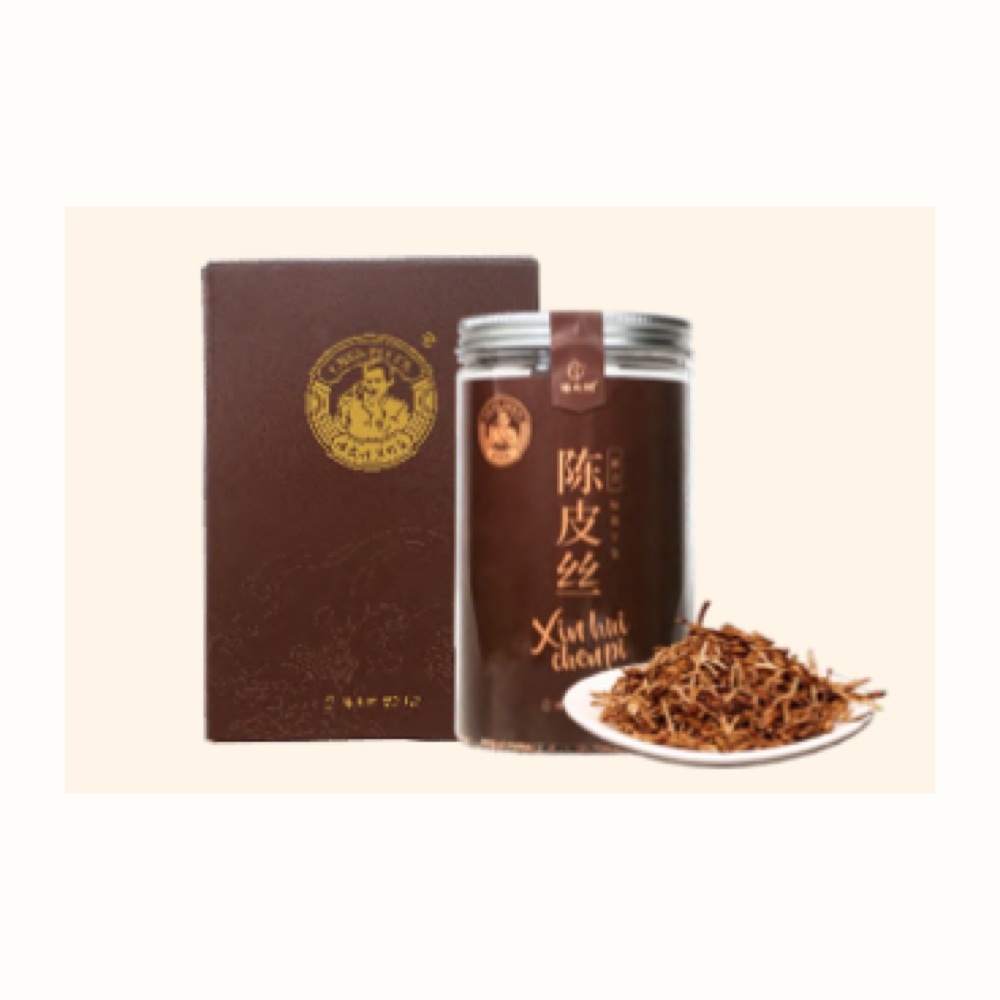
Age is a clue; brewing provides the answer
Ageing changes colour, aroma, taste and chemical composition, but similarly aged peels may not show equally large differences in a daily cup. A 2023 Modern Food Science and Technology study compared 16 batches aged 1, 3, 5 and 7 years. One-year samples were easier to distinguish from those aged three years or more; differences among 3–7-year samples remained, but were smaller and harder to distinguish. Modern Food Science and Technology, 2023
For everyday buying, this means you can try 5, 6, 7 and 8-year samples separately. What matters is the aroma and taste of each actual batch in the cup.
Erhong or Dahong: which suits a daily cup?
By maturity at harvest and processing, Xinhui aged peel is grouped into Qingpi, Erhong and Dahong. Local standard DB4407/T 70—2021 describes Qingpi as pungent and bitter, Erhong as pungent and slightly bitter with some sweetness, and Dahong as pungent with sweet aroma. DB4407/T 70—2021
For daily cup brewing, both Erhong and Dahong deserve a tasting. With Erhong, notice the clarity of mandarin aroma and how pungency, bitterness and slight sweetness connect. With Dahong, focus on how sweet aroma enters the infusion.
Four ways to recognise clear mandarin aroma
- A clear mandarin-peel aroma in the dry peel;
- Aroma rising from the cup after adding water;
- Aroma and taste aligning in the infusion;
- A recognisable aromatic thread remaining in the second infusion.
A fair side-by-side cup test at home
Prepare two samples, 5g each, with 250ml water at about 95°C. Steep for five minutes, smell and taste, then repeat with the same method. Keep every condition consistent so the answer reflects both product differences and your own preference.
Five questions to ask before buying
- Which production year is it?
- Is it Qingpi, Erhong or Dahong?
- Do the growing and ageing records correspond?
- How are storage and batch recorded?
- Are there actual daily cup-brewing notes?
Together, these details turn an age number into a product profile you can understand and verify.
References
- DB4407/T 70—2021, Product of Geographical Indication — Xinhui Aged Mandarin Peel, Jiangmen Administration for Market Regulation.
- Deng Haidan et al., Comparative Quality Analysis of Aged-Peel Tea with Different Ageing Times, Modern Food Science and Technology, 2023.
- Yuan Liu et al., Flavor characterization of Citri Reticulatae Pericarpium with different aging years via sensory and metabolomic approaches, Food Chemistry, 2024.
Updated 18 November 2026 · Selection guidance and public research; no medical or health-effect promise.